How to Package Your Product for National Retail Distribution
01 May 2026
Getting a product into national retail takes more than a good formula, a strong brand, or a great sales pitch. If you want to package your product for broader distribution, the packaging has to support how the item will be displayed, scanned, shipped, handled, and understood at the shelf.
At The Packaging Lab, we look at this as a packaging system, not just a printed bag or pouch. Product packaging needs to work across design, compliance, logistics, and presentation, especially when a product is moving into larger retail environments where small mistakes can create bigger problems. The Packaging Lab also positions its process around format selection, print design, option selection, and file upload, with support available through its Design For Me service for brands that need packaging design help.
Start With the Front Panel and Required Packaging Information
Before a product reaches national retail, the packaging must do more than look appealing. It needs to clearly identify the product, meet labeling requirements, and communicate quickly with shoppers. The front panel plays a critical role in this, as it helps boost brand visibility while guiding first impressions at the shelf.
Effective packaging in retail relies on easy-to-find, well-balanced key information. A cluttered or unclear design can diminish strong branding and reduce shopper engagement.
Make the Front Panel Easy to Read
The front of the package should clearly convey the product, brand, and main selling point. Effective food packaging, for instance, grabs attention quickly and communicates information. A clean design with clear product names and visuals enhances shelf appeal and recognition.
Leave Space for Required Information
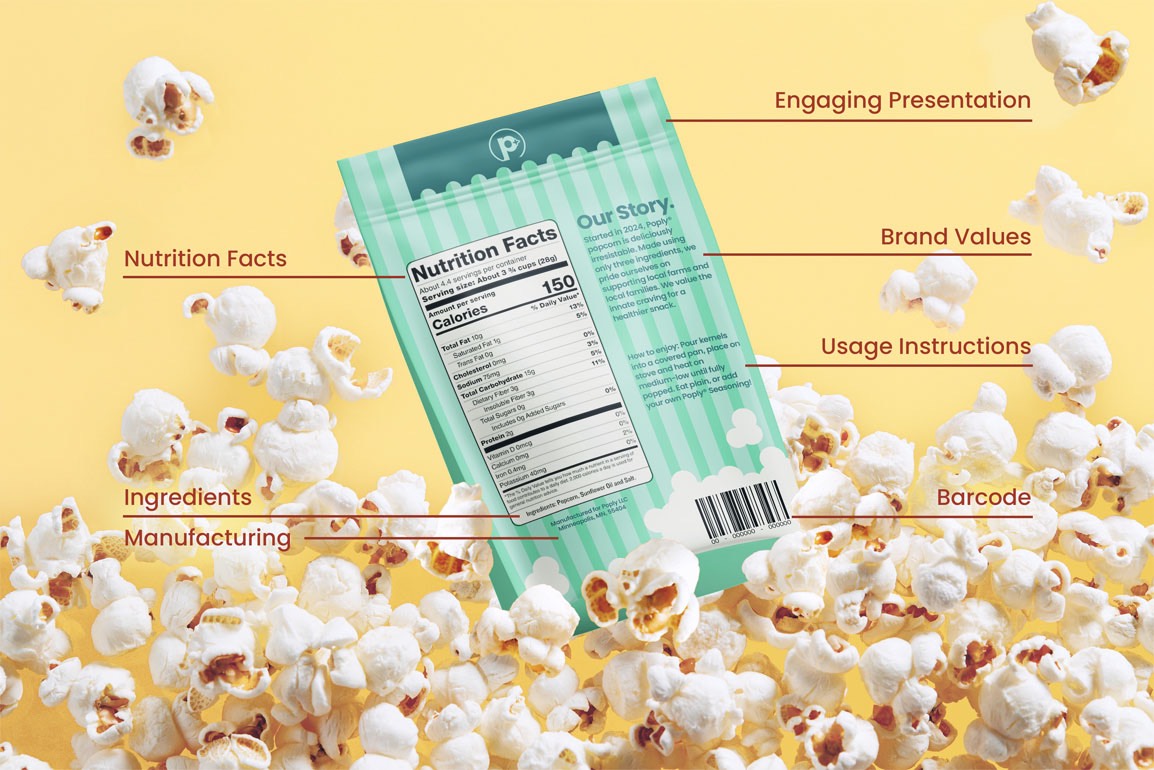
Retail packaging must accommodate essential details for compliance and clarity, such as net contents, ingredients, and usage instructions. A good packaging design should integrate these elements from the start to avoid a crowded or disorganized appearance, ensuring the final product remains clear, readable, and retail-ready.
Make Sure the Packaging Format Fits the Retail Plan
Retail distribution imposes significant demands on packaging, which must not only contain the product but also support shelf presentation, endure handling, and align with filling and shipping. Therefore, selecting the right format early in the process is crucial, as it ensures smoother retail execution and avoids issues with display and storage efficiency.
What to Consider When Choosing a Retail Packaging Format
Before settling on a format, brands should compare a few practical factors that affect day-to-day retail performance:
- Shelf presentation: Does the package need to stand upright or is a flatter profile acceptable?
- Product type: Will the product fit and settle well in the chosen format?
- Filling method: Is the product packed in premade pouches or through automated equipment using rollstock film?
- Storage and shipping: Will the format support efficient case packing, warehousing, and transport?
- Customer experience: Does the package feel appropriate for how the product will be handled and displayed at retail?
The goal is to select a packaging format that supports the entire retail plan, ensuring alignment with production and retail processes to deliver a consistent, manageable final result.
Build Packaging That Works for Shelf Display and Scanning
The next step is to ensure the product functions well in a retail environment. This includes shelf visibility, barcode placement, and details that facilitate stocking, scanning, and recognition.
A retail-ready package should be reviewed for details such as:
- Clear front-panel product identification
- Space for required label information
- Barcode placement that supports reliable scanning
- A format that presents well on the shelf
- Outer packaging or case labeling that supports distribution handling
These details bridge the gap between product packaging and retail use, facilitating the transition from concept to shelf-ready and distribution-ready packaging solutions.
Plan for Packaging and Logistics Together
National retail requires packaging that can move through packing, warehousing, shipping, receiving, and shelf replenishment with fewer problems.
A strong retail packaging plan usually includes this sequence:
- Confirm how the product will be sold at the shelf level.
- Verify what information must appear on the retail package.
- Make sure barcode placement and artwork leave room for scanning and compliance needs.
- Review case-level and shipping-level requirements separately from the consumer-facing package.
- Test whether the chosen format still supports shelf appeal after logistics needs are accounted for.
This is where brands often realize that retail packaging is a coordination exercise between sales goals, operations, and execution. National retail products require unit-level packaging for easy scanning, case-level packaging for warehouse handling, and pallet-friendly dimensions.
Use Packaging Design to Support Retail Readiness
In retail, design needs to help the package communicate quickly, stay organized, and support the information hierarchy required for the category. That is one reason design support is crucial for growing brands. The Packaging Lab offers a Design For Me service, allowing customers to collaborate with a designer or use dielines for their own designs. This ensures professional-looking packaging ready for production.
For brands entering national retail, design support is vital for bridging the gap between concept and execution. Organizing elements like the logo, panels, barcode, product details, and finish choices is essential for creating shelf-ready packaging.
How The Packaging Lab Helps Brands Prepare for Retail Distribution
At The Packaging Lab, we streamline the packaging process by supporting key decisions. We assist brands with packaging decisions, including:
- Comparing stand-up pouches, lay-flat pouches, and rollstock film.
- Reviewing sample packs to evaluate size, material, and finish options.
- Using dielines to prepare packaging artwork more accurately.
- Getting design support through design for me.
- Choosing packaging that better fits shelf display, filling needs, and distribution goals.
This support makes the retail path more manageable and helps brands evaluate packaging choices based on how the product will be packed, presented, and sold.
Build Retail Packaging That Supports the Next Stage of Your Brand’s Growth
National retail distribution puts more pressure on every packaging decision. The package has to look right, communicate clearly, support scanning, and move through the supply chain without unnecessary friction.
If you are getting ready to package your product for wider retail distribution, contact The Packaging Lab today to review your format options, packaging design support, and the practical details that affect retail readiness. We can help you evaluate custom product packaging choices that better support shelf display, packaging, and logistics planning, and the next stage of growth for your brand.