Why You Should Order a Sample Pack Before Your First Print Run
31 July 2026
Your first custom packaging order can feel like a big commitment. Artwork, pouch size, finish, material, and closure details all need to work together before the package is printed and filled.
This is why many brands should order a sample pack before moving into their first print run. A physical sample helps confirm how the package looks, feels, stands, fills, opens, and reseals with the actual product inside. It does not replace final proofing or product-specific checks, but it can reduce the amount of guesswork before production.
Why Should You Order a Sample Pack Before Your First Print Run?
Brands should order a sample pack before their first print run because physical samples help confirm pouch size, product fit, material feel, and finish before custom artwork is printed. A pouch can look right on a screen, but the real test happens when the product is placed inside.
What a Mockup Cannot Show You
A digital preview shows layout, color, and general shape, but not how the product actually settles inside the pouch. Powders, coffee, granola, and pet treats each fill differently, and a bag that looks balanced on screen can stand crooked, leave too much headspace, or feel too narrow to scoop from once it is packed.
Those are also the things a customer notices first. They handle the pouch, open it, reseal it, and store it, forming an impression from how it feels in the hand rather than from its dimensions. A physical sample is the only way to see the package as the buyer will.
What Is Included in The Packaging Lab Sample Pack?
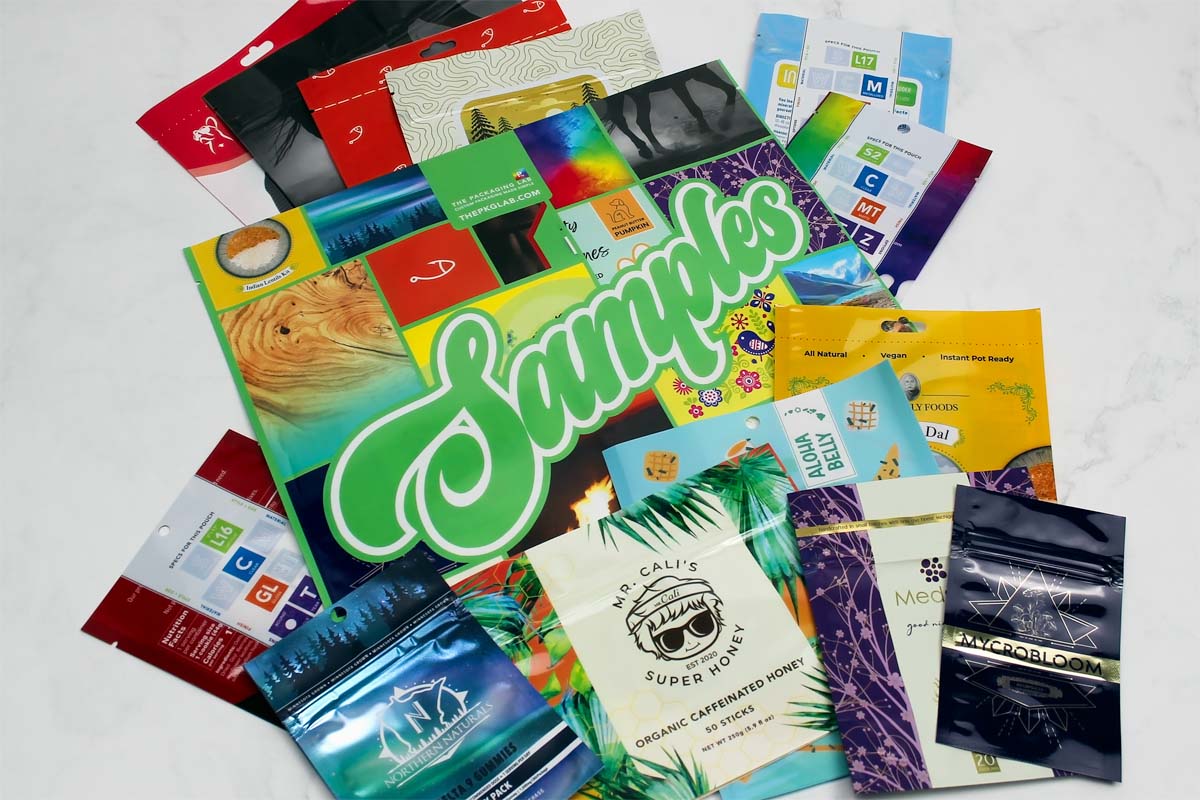
The Packaging Lab sample pack is free and includes one of each of all 20 pouch sizes, along with a variety of materials, finishes, and option combinations. It's designed to help you test your product for sizing before committing to a first custom print run.
Why Seeing All Sizes Matters
Listed pouch dimensions do not always tell the full story. A product’s weight, shape, density, and fill level can change how much space it needs and how the package presents once filled.
Seeing all sizes gives brands a clearer starting point. A pouch that appears too large flat may look right after filling, while a size that seems efficient online may feel overpacked or difficult to use in person.
Why Materials and Finishes Should Be Compared Physically
Material and finish choices affect more than appearance. Matte, gloss, clear, white, metallized, zipper, and hang-hole options can change how the package feels, photographs, and supports the brand presentation.
A physical comparison helps teams make better design decisions, since the wrong finish is one of the quieter ways packaging works against a brand. Some artwork needs stronger contrast, some products need a more premium feel, and digital pouch printing is what makes it practical to test those directions without a large run.
What First Print Run Mistakes Can a Sample Pack Help Catch?
A sample pack helps catch size, format, handling, and finish issues before they become part of a printed order, one of several ways to test packaging before a launch. It is especially useful when the brand is ordering custom packaging for the first time or changing from labels to printed pouches.
Common issues sample testing may reveal include:
- The pouch is too small for the true fill volume
- The package has too much headspace after filling
- The opening is too narrow for scooping or pouring
- Finish does not match the brand’s visual direction
- Resealable closure is unnecessary or difficult to use
Samples reduce guesswork, but they do not replace final artwork proofing, product-specific review, or any required compliance checks.
Which Packaging Types Should Brands Compare Before Printing?
Brands should compare the packaging type that matches how the product is filled, displayed, shipped, and used. The right format should support both the product and the customer’s first experience with the package.
Custom Stand-Up Pouch vs. Custom Lay-Flat Pouch
Custom stand-up pouches work well when shelf visibility matters. They give the package a stronger front-facing presence, which helps on retail shelves, market tables, and anywhere the product needs to stand upright.
On the other hand, custom lay-flat pouches may be a better fit for smaller portions, samples, compact packaging, or products that do not need a standing base. The choice should follow the product's size, use pattern, and display needs, and it is worth working through the questions to ask a stand-up pouch supplier before you commit.
Custom Mylar Bags, Rollstock, and Flow Wrap Film
Custom Mylar bags may fit products that need stronger barrier protection, especially when light, moisture, or oxygen exposure is part of the packaging concern. The structure should still match the product’s actual sensitivity and storage needs.
Custom rollstock film and flow wrap film are usually more tied to production equipment. Brands moving into automated filling or wrapping should confirm machine requirements before choosing a film format.
How Does Sample Testing Help Different Product Categories?
Each product category behaves differently inside a pouch, so the checks that matter shift with what you are packing.
A few category-specific checks are worth making:
- Food products: fill volume, storage needs, and resealability
- Beauty products: texture, leakage risk, and presentation
- Coffee and tea: aroma protection, valve needs, and finish direction
- Pet food and snacks: pouch strength, storage, and repeat use
The sample pack does not choose the package for the brand. It gives the team better information before the first print run turns a packaging decision into inventory.
When Should You Move From Sample Pack to Print Run?
Once the filled sample checks out, you are ready to print. By this point, you have confirmed what the earlier sections covered: the pouch holds the true fill volume, stands and reseals the way you need, and feels right in the hand rather than just on paper. That is, packaging is treated as a system rather than a final design step, the thinking behind the 5 P's of packaging, and moving to production simply locks in what the sample proved.
Two things happen in order from here. First, finalize the format, since the size, orientation, finish, and print area define the canvas your artwork has to fit. Building the design around a confirmed structure prevents layout problems from surfacing at proof. Second, submit and review carefully. After you order, a digital proof is sent for you to accept or reject, so that is the moment to catch anything the sample missed before it goes to print.
How Can The Packaging Lab Help Before Your First Print Run?
The Packaging Lab helps brands compare sample pouches before ordering from a custom pouch packaging manufacturer that produces stand-up pouches, lay-flat pouches, Mylar bags, rollstock film, and flow wrap film, based on the product and production plan. The free sample pack gives you a practical way to compare size, material, finish, and options before placing a custom order, so first-run decisions rest on a physical review rather than a screen.
Is your first print run ready for a real product test? Before ordering custom packaging, confirm how the product fills, stands, opens, and reseals in a real pouch. Contact The Packaging Lab today and order a free sample pack to see how your product fits before moving into custom-printed packaging.