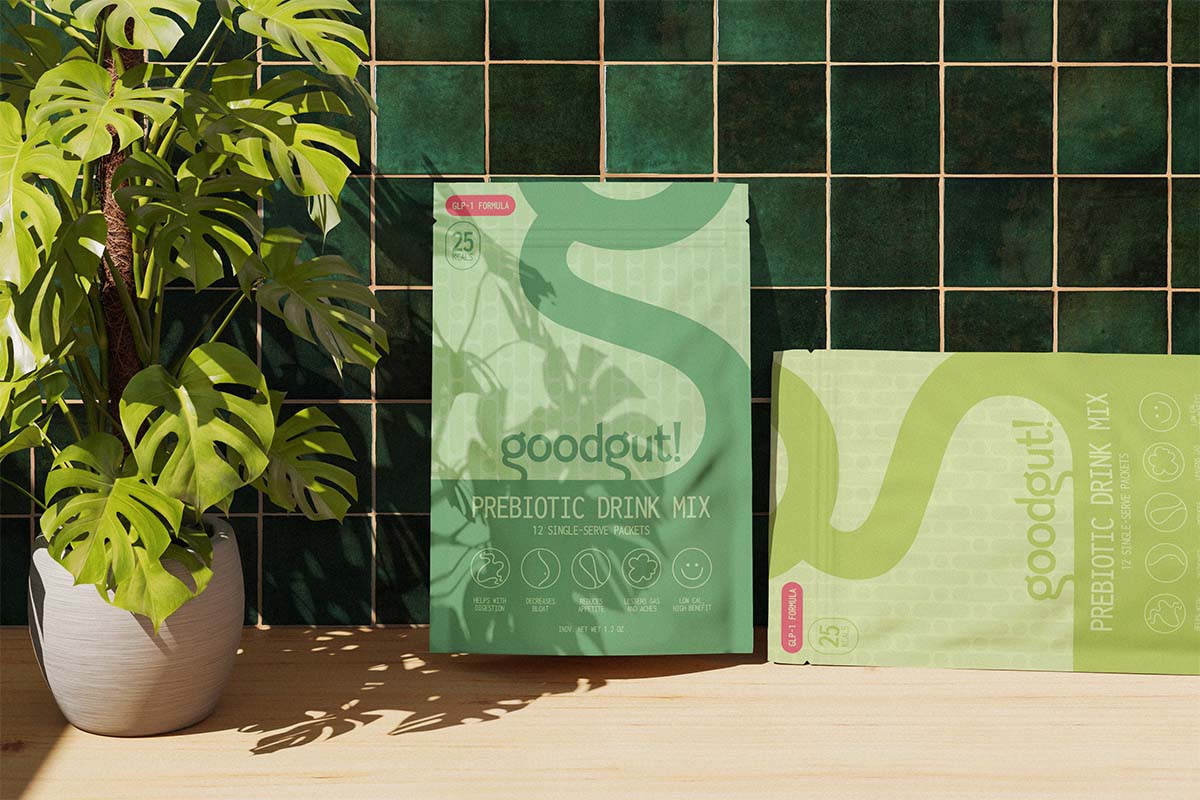
Why Single-Serve Packaging Is Winning in the GLP-1 Era
21 August 2026
A large group of shoppers now eats less at a sitting and reaches for smaller, functional servings. Single-serve packaging sits at the center of that shift. The driver is the rapid adoption of GLP-1 medications, and the brands adjusting their portion formats early are the ones capturing it.
One thing to settle first, because it changes how you plan. We print the rollstock film used to make stick packs and sachets. Your co-packer or filling line forms, fills, and seals it. If you do not have a filling partner yet, that is the first problem to solve, ahead of artwork.
What the GLP-1 Numbers Actually Say
GLP-1 medications such as semaglutide and tirzepatide reduce appetite and change how food tastes, so users eat less and choose differently. Multi-serve formats are declining as a result, while single-serve and portion-controlled options grow.
The headline number is often misquoted, so here it is precisely. Circana's November 2025 research found that GLP-1 households account for 23 percent of all U.S. households and projects that they will represent 35 percent of all food and beverage units sold by 2030. Units, not dollars. That is the figure that matters for a format decision.
The same research found GLP-1 users buying more protein, fiber, and healthy fats while cutting carbohydrates and sugar. That is the purchasing shift; a portion-controlled line exists to meet.
The counter-argument is worth knowing. A more conservative reading treats GLP-1 users as a dieting cohort comparable in size to keto or intermittent fasting, which would make this a significant segment rather than a total market reset. Either reading supports adding a portion-controlled line. Neither supports rebuilding your whole catalog around it.
Smaller Appetites Reset the Serving Size
A large multi-serve bag starts to feel like a commitment that a smaller appetite cannot finish, which pushes demand toward single portions that match how much a person actually eats. Circana also found that some purchasing habits persist after people stop, and that 50 percent of former users say they are likely to use the medication again. This is not a segment that vanishes when a prescription ends.
Protein and Fiber Take Priority
Reduced appetite raises the stakes on every bite. Users lean toward protein, fiber, and functional ingredients that do more in less volume, so a single sachet holding a measured dose, say 15 grams of protein, fits the routine better than a tub that has to be scooped and rationed. Packaging that shows those numbers clearly earns the pickup.
Stick Packs and Sachets Fit the New Routine
The format doing the most work here is the stick pack, along with its flat cousin, the sachet. Both deliver one dose, travel well, and open fast. Industry coverage of why stick packs keep growing ties their rise to portion control, precise dosing, and on-the-go use. It also puts typical throughput near 40 packs per minute per lane, which is 400 and up on a ten-lane machine, useful when you are modeling unit costs.
A stick pack slips into a pocket, a purse, or the neck of a water bottle. If you are choosing between the two, our look at stick packs and sachets compared breaks down which suits your product.
Designing for a Single Dose
Shrinking a multi-serve pouch to one dose is not simply scaling the artwork down. Three areas need a fresh look:
- Front-of-pack hierarchy: With far less surface area, lead with the claims that sell, such as grams of protein, grams of fiber, or zero added sugar, so they read at a glance.
- Barrier protection: Single-serve removes one kind of exposure and adds another. The product never sits in a reopened bag, so it avoids repeated headspace exposure. But a single dose has a high surface-area-to-volume ratio, which means the film itself has to work harder. High-barrier laminates carry that load across the shelf life.
- Easy opening: Tear notches are the practical option for sachets and stick packs, and they matter more in a format meant for a water bottle or a gym bag, where a clean tear and a controlled pour happen one-handed.
If the artwork has to be rebuilt for a smaller canvas, our design team can rework the layout so the important numbers stay legible at single-serve size.
Launching a Supplement-Ready Single-Serve Line
Moving to single-serve multiplies unit counts, which can stall a launch when every SKU needs its own printing plates. Domestic digital printing removes that bottleneck and keeps a downsized line moving.
How Production Splits
Stick packs and sachets are formed, filled, and sealed from printed rollstock film, so production runs in two stages with two suppliers. We print the film in Minnesota, cut to your filling machine's web width, and repeat the length. Your form-fill-seal line or co-packer handles forming, dosing, and sealing in a single pass. Send your machine specs before you finalize artwork, because repeat length drives how the design lays out.
What a Trial Run Looks Like
Digital printing skips plate and cylinder setup, so several flavors can run in one batch, and short trial runs stay affordable. Rollstock carries a practical floor that our pouches do not, and it is set by your filling line rather than by us. Ahead of a full commercial fill, our guide to testing packaging designs before a launch shows how to de-risk the rollout.
Where to Start With Your Single-Serve Packaging
The GLP-1 shift is early enough to catch and moving fast enough to reward brands that move now. A portion-controlled line lets supplement and nutrition brands meet users where their appetite actually is, with clear labeling and a format built for daily use.
Two things to have in hand before you contact us: your filling partner, and your machine web width and repeat length. With those, we can quote printed rollstock and turn a trial run around quickly. Send specs to The Packaging Lab today or request a free sample pack.
Frequently Asked Questions
What is the difference between a stick pack and a sachet?
Both are single-serve, but the shape differs. A stick pack is a narrow, tube-like column sealed at each end, sized to slip into a pocket or pour into a water bottle. A sachet is a flatter, wider packet, usually sealed on three or four sides, that suits slightly larger or flatter fills. Product type, dose size, and how a customer opens it usually decide which one fits.
How are stick packs and sachets manufactured?
Production splits into two stages. A printer produces the rollstock film. A form-fill-seal line then shapes it into individual packs, doses the product, and seals each one in a single pass. We supply the printed film cut to your machine's web width and repeat length. Brands without their own line hand off to a co-packer. Getting film specs right before filling starts prevents costly reruns.
What barrier protection do single-serve powders need?
More than the small size suggests. A single dose has a high surface-area-to-volume ratio, so proportionally more product sits against the film than in a large bag. High-barrier laminates help protect protein, fiber, electrolyte, and vitamin powders from clumping or degrading. The right structure depends on the ingredient, the claimed shelf life, and storage conditions.
Can a brand order a small trial run of single-serve packaging?
Yes, within limits. Digital printing removes plate and setup fees, so short runs are practical, and several flavors can print in one batch. We set no minimum order. The practical floor comes from your filling line, which needs enough web to thread, run up to speed, and produce sellable packs. Ask your co-packer for that number, then trial a downsized format before committing to a high-volume fill.