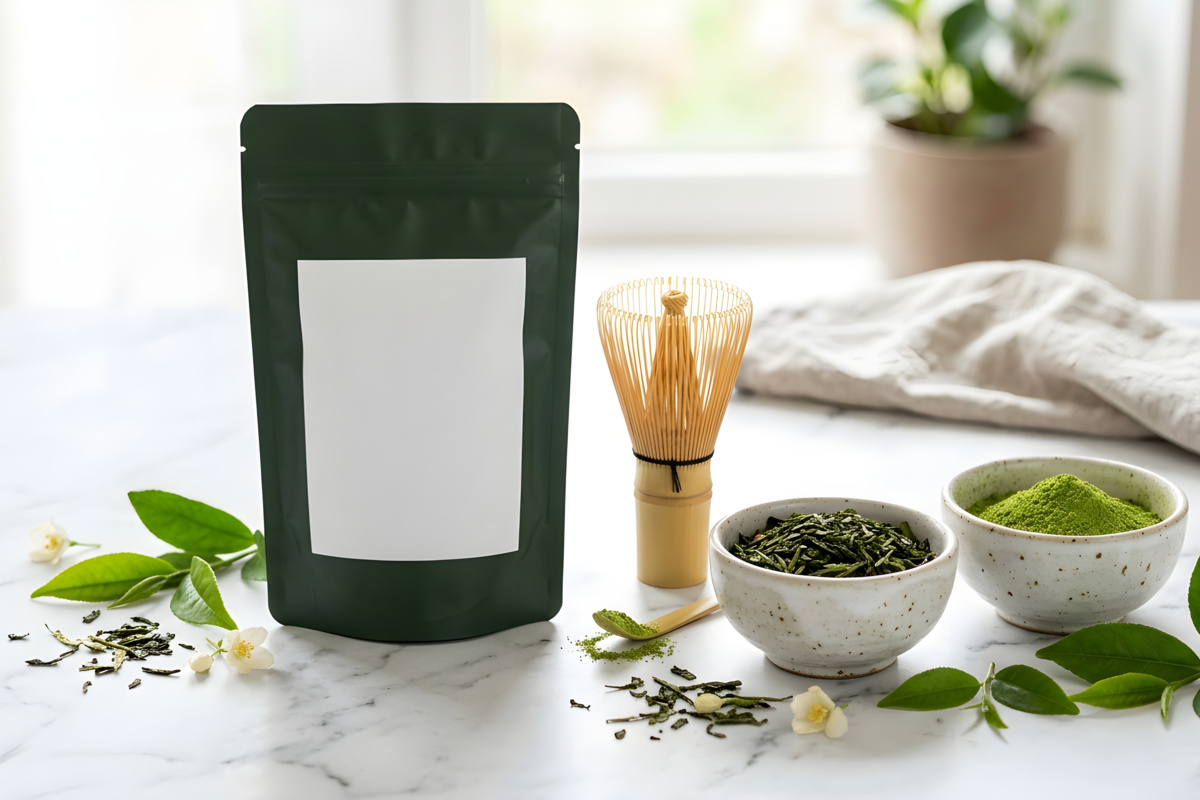
Tins vs. Pouches: Which Is Best for Custom Matcha & Tea Packaging?
18 September 2026
Matcha is one of the least forgiving products to package. Ground to a fine powder, it reacts fast to light, air, moisture, and heat, losing its bright green color and its antioxidants within weeks of exposure. So when you plan custom matcha tea packaging, the container is not only branding, it is shelf life. The classic debate comes down to two formats: the traditional metal tin and the modern stand-up pouch.
Both can protect matcha well when built right, but they differ sharply on cost, freight, and how they behave as the product gets used. Here is how tins and pouches actually compare, and how to choose the format that keeps your tea fresh and your margins healthy.
What Matcha Needs From Its Packaging
Matcha has five enemies: oxygen, light, heat, moisture, and strong odors. Oxygen oxidizes its catechins and fades the chlorophyll that gives it color, while light, even indirect retail lighting, speeds that breakdown through photodegradation. Moisture causes clumping and accelerates decline. Retail guidance on storing matcha for freshness lands on three rules: keep it opaque, airtight, and cool. Any format you choose has to deliver the first two, which is where tins and pouches diverge.
Tins vs. Pouches on Protection
On paper, both a quality tin and a high-barrier pouch can shield matcha when they are packaged to preserve freshness. The difference shows up in the details and over time.
Tins: Rigid, Premium, and Not Always Airtight
A metal tin blocks light completely and feels premium in hand, which is why many ceremonial brands like them. The catch is the seal. Many decorative tins use a slip lid that does not lock out air, so oxygen reaches the powder every time the tin sits on a shelf. And because a tin holds its shape, the empty headspace grows as the product is used, leaving more trapped air against less matcha.
Pouches: An Opaque Barrier That Collapses as You Use It
A high-barrier stand-up pouch made from opaque or metallized laminate blocks light and oxygen just as well, and a heat seal makes it fully airtight until the customer opens it. The real advantage is flexibility: the pouch collapses as matcha is used, so a customer can press out excess air before resealing, a step tea experts recommend to slow oxidation. Avoid clear film for matcha, though, since it lets light in; opaque white or metallized film is the right call.
Cost, Freight, and Flexibility
Protection aside, the business case usually favors pouches, especially for a growing brand:
- Lower setup: Custom pouches skip the tooling, embossing, and high minimums that come with custom tins.
- Cheaper freight and storage: Empty pouches ship and store flat, so a single pallet holds tens of thousands of them.
- No shipping air: Rigid, non-nesting tins mean you pay to move and warehouse mostly empty space.
- Easy SKUs: Digital printing lets you run several teas at once without new plates.
If you are also weighing rollstock film, our comparison of rollstock and pouches for green tea covers that angle.
Closures for a Fine Powder Like Matcha
Fine matcha behaves differently from loose leaf at the closure. Powder settles into the tracks of a standard press-to-close closure and can keep it from sealing fully, which is why some powder brands use specialized powder-proof or hook-to-hook closures designed to shed particles. Our pouches use a standard press-to-close closure, so the airtight protection comes from the heat seal we apply across the top, and the reclose is there for daily convenience. For matcha, the practical routine is the one tea sellers already recommend: press out the air, wipe the track, and reseal, or simply fold and clip the pouch between uses.
How We Build Custom Matcha Tea Packaging at The Packaging Lab
We make it simple for tea brands to move from stock tins to fully branded pouches without a big upfront commitment.
Low Minimums and Multi-SKU Printing
You can launch a ceremonial line and a daily grade at the same time, or print Matcha, Hojicha, and Sencha in one run, with no plate fees and no minimum order. Order a single custom stand-up pouch to test, then scale when the line sells.
Opaque, Food-Safe, High-Barrier Film
Our films are high-barrier and FDA food-safe, and for a light-sensitive tea, we steer you to opaque white or metallized stock that keeps light out. If your artwork needs work, our design team can build it for the pouch and its dieline. Everything is printed digitally and made in the Minneapolis metro, so a new tea launches in days, not months.
Choose Packaging That Protects Every Scoop
For most tea brands, a high-barrier opaque pouch protects matcha as well as a premium tin while cutting cost, freight, and launch time. A tin still makes sense when the container is part of a gift or a ceremonial ritual, but for everyday shelf life and flexibility, the pouch wins. For coffee and tea brands weighing the switch, the math usually favors flexible packaging. Contact The Packaging Lab today to grab a dieline, request a free sample pack, or price a short run. We will help you build custom matcha tea packaging that keeps every scoop fresh.
Frequently Asked Questions
What packaging keeps matcha freshest?
Opaque, airtight, high-barrier packaging kept cool and dark. Choose a metallized packaging, or opaque white structure that blocks light and oxygen, and skip clear glass or clear film, which lets light degrade the color and antioxidants. Whatever the format, seal it well and press out excess air after each use.
Should a matcha pouch have a clear window?
For matcha, no. A clear window lets light reach the powder and speeds up the fading and oxidation you are trying to prevent. If you want to show the product, save windows for less light-sensitive teas and keep matcha in fully opaque film.
Do metal tins keep tea fresher than pouches?
Not automatically. A sealed, opaque tin protects tea well, but many decorative tins use loose slip lids that let air in, and their rigid shape leaves growing headspace as the tea is used. A heat-sealed high-barrier pouch is airtight until opened and collapses so a customer can push out air before resealing.
What is the minimum order for custom tea pouches?
With us, there is no minimum on standard sizes, so you can order a single pouch to test before you commit. Digital printing also lets you run several teas in one batch, which makes it easy to launch or refresh a line without a large upfront order.