What Do Food Packaging Symbols Actually Mean on Stand-Up Pouches?
04 September 2026
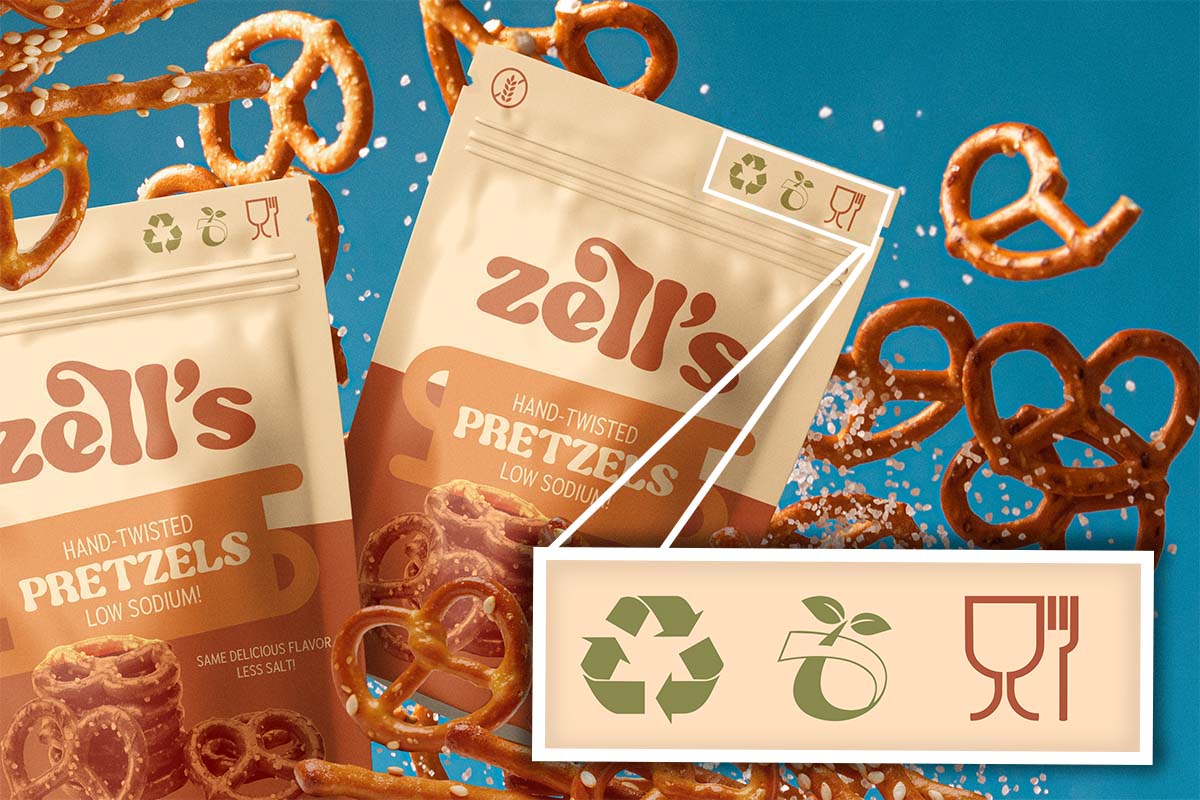
Turn a stand-up pouch over, and you will find a cluster of tiny marks: triangles, seals, arrows, and icons. Most shoppers scan past them, but the food packaging symbols on your pack carry real weight. Some are legal requirements, some are earned certifications, and some quietly tell a customer how to store, open, or recycle what they bought. Print the wrong one, or place a required one badly, and you risk a compliance problem or a confused buyer.
Not every mark belongs on every pouch, and a few are widely misunderstood. Below, we sort the main symbols into three groups: recycling, compliance, and handling, so you can decide which ones your product needs and where each belongs on the layout.
Recycling and Resin Codes: What They Really Mean
The triangle of arrows with a number inside is the most misread mark on any pouch, so it is worth getting right.
The Number Identifies the Plastic, Not Recyclability
Inside the arrows, a Resin Identification Code from 1 to 7 names the plastic, and nothing more. On flexible pouches, you will usually see Code 2 or Code 4 for polyethylene films that are often eligible for store drop-off, Code 5 for polypropylene used in high-clarity or high-heat packs, and Code 7 for multi-layer laminates that combine materials like PET, foil, and polyethylene and rarely get recycled. The number tells you the material, not whether your local curbside bin will take it. California's accurate recycling-label rules spell out that difference in law.
Store Drop-Off, How2Recycle, and a 2026 Rule Change
Most flexible pouches are store drop-off at best, and many are simply trash, so a plain chasing-arrows symbol can mislead. Standardized How2Recycle labels fix that by telling shoppers exactly where a pack goes. A bigger shift is coming too: starting October 4, 2026, California's SB 343 bars the chasing-arrows symbol on packaging that does not meet the state's recyclability criteria, and because brands sell nationally, many are already revising pouch artwork. Minnesota, where we are based, is one of seven states with an active packaging program and 2026 obligations, so honest labeling matters even close to home. If you are tracking these changes, our rundown of packaging shifts worth watching puts them in context. Our own films are not recyclable yet, so we help brands label them truthfully rather than overclaim.
The Compliance Symbols Regulators Require
Some marks are not optional. For most packaged foods sold in the United States, the FDA requires a core set of label elements, and leaving one off can hold up a product.
- A statement of identity: The common name of the product, plus the net quantity of contents.
- A Nutrition Facts panel: In the current FDA format.
- An ingredient list: In descending order by weight, using plain common names.
- An allergen declaration: Covering the nine major allergens, including sesame, since 2023.
- The name and address of the manufacturer, packer, or distributor
The FDA's food labeling guide lays out the details, and it is worth remembering that the FDA does not pre-approve labels, so the accuracy is on you. Beyond the required text, certification seals are earned, not free to use. You may display the USDA Organic seal only if your product is certified and meets its rules, and the same holds for the Non-GMO Project, Fair Trade, and Kosher marks. Selling abroad adds more: the European food-safe symbol, a glass and fork, signals material that is safe for food contact, while France's Triman mark directs disposal.
Storage and Handling Symbols Protect the Product
A third group of icons carries no legal force but saves space and prevents damage by replacing sentences with a picture.
Temperature and Cooking Cues
Marks like Do Not Freeze, Store in a Cool, Dry Place, and Microwave Safe, often paired with a steam-vent note, tell distributors, retailers, and shoppers how to keep the product at its best. On a small pouch, an icon does the job that a paragraph cannot.
Functional and Opening Cues
Other symbols point to how the pack works: an arrow marking the tear notch, a press-to-close indicator showing where the reclose sits, or an illustration marking a one-way degassing valve on fresh coffee. These cues reduce spills, returns, and confused reviews.
How We Help You Place Symbols Correctly at The Packaging Lab
Getting symbols right is as much a layout problem as a design one, and it is where a lot of first-time pouches go wrong. At The Packaging Lab, we hand you dielines that mark the safety zones, seal areas, barcode quiet zones, and closure track, so a required mark never lands where it will be trimmed or creased. If your artwork needs work, our design team can build or review the layout to ensure seals like USDA Organic or a How2Recycle label meet the required size, 300 DPI resolution, and contrast to remain legible.
Because we print digitally with no plates, you can also update a single icon across several flavor SKUs without new tooling, which matters when a rule like SB 343 forces a change. As a Minnesota manufacturer with no minimums, we make it easy for Minnesota food brands to test a compliant design before a full run.
Get Your Food Packaging Symbols Right the First Time at The Packaging Lab
A pouch has limited space, and every symbol competes for it. Working with the Packaging Lab, a custom pouch packaging manufacturer that knows the layout rules, helps you decide early which marks are legal requirements, which are earned certifications, and which simply help the customer, then place them so nothing gets cut at the seal. For food brands, getting this right protects both compliance and the trust a clean label builds.
Your label gets one first impression, and a single misplaced mark can undo it. Before you print, send over your artwork. We will make sure the layout reads cleanly, meets the rules, and carries the right food packaging symbols.
Frequently Asked Questions
Does the recycling symbol mean my pouch is recyclable?
Not by itself. The number inside the triangle is a Resin Identification Code that names the plastic; it says nothing about whether your local program accepts it. Most flexible pouches are store drop-off at best, and many are not recyclable at all, so pair any recycling mark with clear, honest instructions.
Can I use the USDA Organic or Non-GMO seal without certification?
No. Those seals are earned. You may only display the USDA Organic seal if your product is certified to its standard, and the Non-GMO Project, Fair Trade, and Kosher marks work the same way. Using a seal you have not earned is a labeling violation, not a design choice.
How small can the text and symbols on a food pouch be?
The FDA sets minimum sizes for key elements, such as ingredient text and the Nutrition Facts panel, and a symbol still has to read cleanly at print size. The same limits apply across every food packaging format, so keep required marks off the seal area and closure track where they could be cut or crushed, and check contrast against your background color.
Do I need different symbols to sell in California or overseas?
Often yes. California's SB 343 restricts the chasing-arrows symbol unless the pack meets state recyclability criteria, France requires the Triman disposal mark, and the European food-safe symbol signals food-contact safety. Confirm the rules for every market before you finalize artwork.